

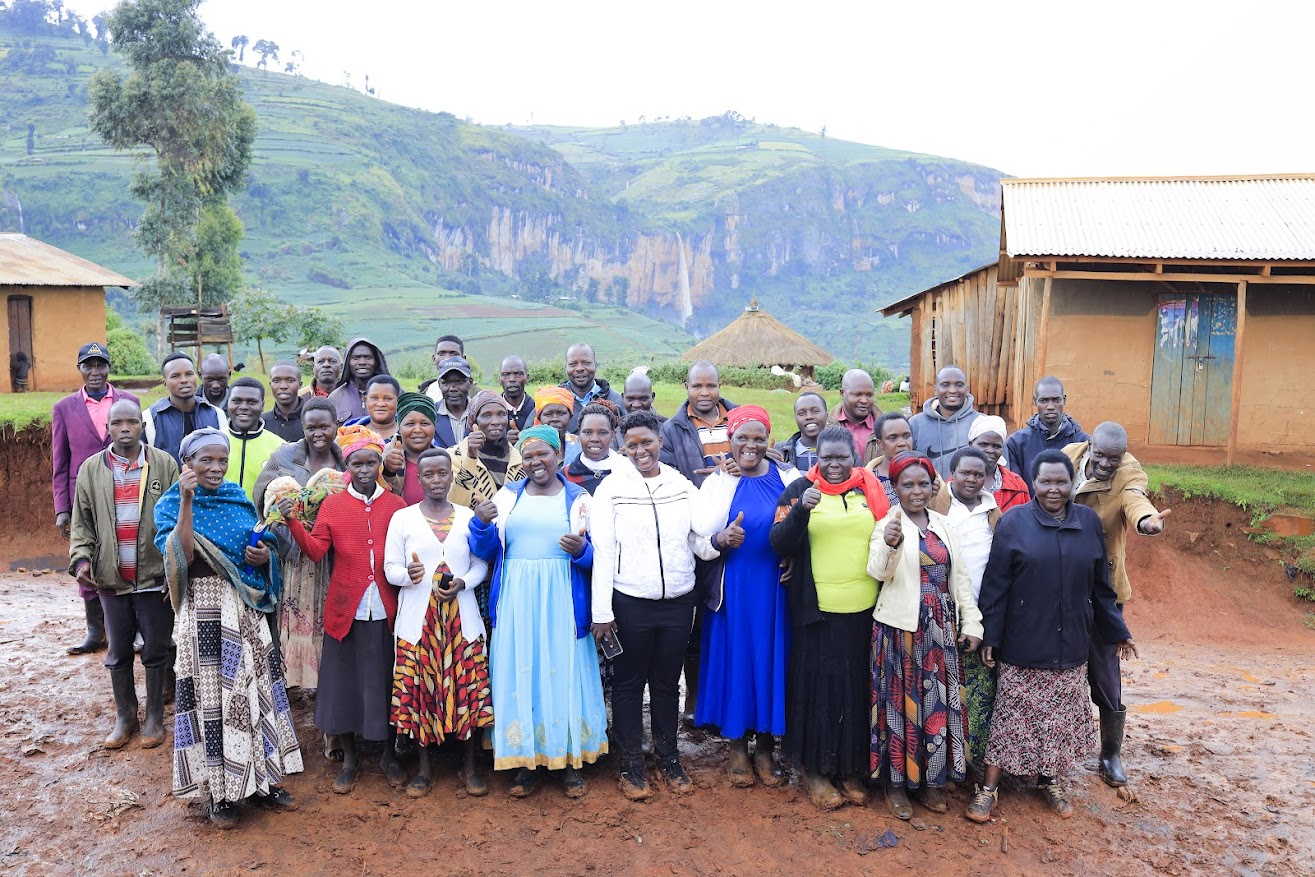
Uganda Breweries Limited (UBL), in partnership with Aidenvironment and local stakeholders under the Elgon Pamoja initiative, is transforming farming communities in the Mt Elgon catchment area through investments in clean water access, sustainable energy, and climate-smart agriculture.
During a recent field tour across the districts of Kapchorwa, Bukwo, Kween, and Bulambuli, communities showcased a range of projects already improving livelihoods, including rainwater harvesting tanks, household biogas digesters, organic manure systems, contour terraces, and soil conservation measures.
Since 2024, UBL has invested more than Shs1 billion into the Elgon Pamoja programme, which focuses on soil conservation, ecosystem restoration, and sustainable land management practices aimed at protecting water sources, reducing erosion, and improving agricultural productivity.
The programme has introduced rainwater harvesting tanks at both household and community level, providing reliable access to clean water for domestic use and small-scale irrigation.
Residents say the intervention has reduced the burden on women and children who previously walked long distances in search of water while also lowering cases of waterborne diseases.
At household level, biogas digesters are helping families convert animal and crop waste into clean cooking fuel and nutrient-rich organic slurry used to improve soil fertility.
The initiative also promotes contour terracing, tree planting, riparian restoration, and organic farming practices designed to stabilize slopes, improve moisture retention, and protect the Mt Elgon ecosystem from further degradation.
UBL currently works with more than 5,850 farmers across the Mt Elgon region, sourcing barley, sorghum, and maize through its local supply chain. The programme supports over 11,500 acres under cultivation and continues to expand sustainable farming practices in key agricultural communities.
“Our goal is to build flexible farming communities while strengthening sustainable local sourcing,” said Yudaya Anita, Market Specialist at Uganda Breweries Limited and Agronomy Manager for the Elgon region.
“When farmers have access to water, cleaner energy, and improved farming practices, families earn more, communities become healthier, and agriculture becomes more sustainable for future generations,” she added.
Anita said the Elgon Pamoja framework specifically targets major farming hubs to promote long-term self-sufficiency and resilience against climate change.
For many farmers in the region, the programme has already brought measurable improvements in income and household welfare.
Alex, a farmer from Benet Sub-county in Kween District, said switching from maize to barley farming significantly improved his livelihood.
“My farming journey started in 2001 with maize, which didn’t help me much because it takes a long time to mature,” he said.
“Since I switched to barley farming, my life has completely changed. I have been able to expand my land, construct houses, and comfortably take my children to school.”
“In our community, we now call barley the ‘school fees crop’ because it supports us with a reliable income. One can earn up to Shs8 million in just three months,” he added.
In Bukwo District, farmers say the combination of water infrastructure, soil conservation, and secure market access has helped communities recover from years of unpredictable weather and declining soil fertility.
“We used to walk miles for dirty water,” said Sophie, a 62-year-old sorghum farmer from Bukwo.
“Since our village received a communal water tank, terraces, and a household biogas unit, my children are healthier, our crops perform better, and we have a stable market link with UBL.”
“Now our soil holds the rain, we cook with clean biogas, and I sell more sorghum to the brewery,” she added.
Another beneficiary, Chemutai, said access to nearby water sources had greatly reduced household expenses and eased daily life.
“We were incredibly glad to be considered for the water tank project,” she said.
“I thank UBL and Aidenvironment because this has made our lives easier. Previously, we used to spend a significant amount of money traveling long distances just to secure water.”
According to programme data, demonstration farms under the project have registered a 30 to 40 percent increase in crop yields, while communities using biogas systems have significantly reduced their dependence on firewood.
Health conditions in participating households have also improved due to increased access to clean water.
Nationally, more than 1,100 households are benefiting from UBL’s wider solar energy and rainwater harvesting initiatives.
Stakeholders say the Elgon Pamoja initiative is emerging as a model for sustainable rural development by combining environmental conservation, community empowerment, and climate resilience while securing long-term supply chains for brewing raw materials.
